

Imagine you walk into a shop that looks great from outside, but once you’re inside, the lights flicker, the aisles are confusing, and you can’t find what you came for. How long would you stay? Probably not long.
Websites work the same way. SEO might bring people to your site, but UI and UX decide whether they stay or leave.
So the big question is: Is UI/UX important for SEO?
Short answer: Yes, but not in the way many people think.
Let’s break it down for your better understanding of SEO.
Table of Contents
What do UI and UX actually mean?
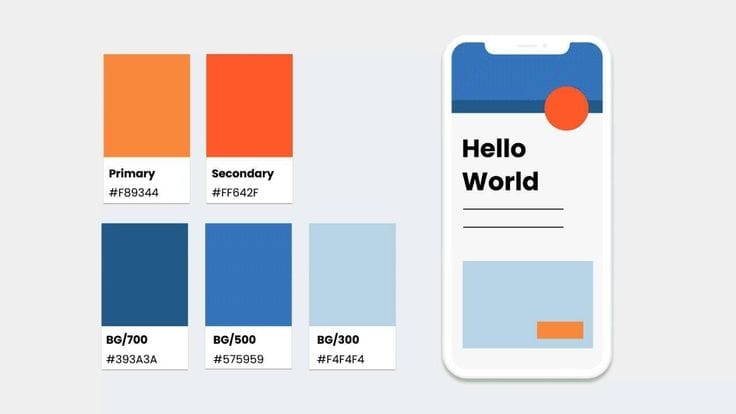
Let’s keep this easy.
UI (User Interface) is how a website looks.
Buttons, colors, fonts, spacing, images, menus, everything you can see and click.
UX (User Experience) is how a website feels to use.
Is it easy to find things? Is it fast? Does it make sense? Or does it feel confusing and annoying?
UI is part of UX. A site can look pretty but still be frustrating to use. And a site can be easy to use but look so bad that people don’t trust it.
What SEO really cares about?
SEO is about helping search engines like Google understand your website so they can show it to the right people.
At its core, SEO focuses on things like:
- Can Google crawl and read your pages?
- Do your pages match what people are searching for?
- Is your content useful?
- Do people click your result and stay, or leave right away?
SEO is not a design tool. Google does not look at your site and say, “Wow, that blue button is beautiful.”
But Google does care about how users behave once they land on your site.
And this is where UI and UX enter the picture.
Key idea most people miss about SEO and UX!
A very honest take from many professionals is this:
SEO and UX have different jobs, but the same final goal.
You can win at one and fail at the other.
You can rank number one on Google but still lose if users arrive and instantly leave because your site is slow, confusing, or ugly.
And you can have an amazing website that nobody ever sees because SEO was ignored.
The magic happens when both work together.
Does Google directly rank UI/UX?
This is where things get confusing.
Google does not have a single “UX score” or “UI score” that magically boosts rankings. UX by itself is not a direct ranking factor.
But here’s the important part:
Google tracks user behavior.
If users:
- Click your result and leave immediately
- Don’t scroll
- Don’t visit another page
- Don’t engage at all
Google starts to think: “Maybe this page wasn’t helpful.”
On the other hand, if users:
- Stay longer
- Scroll
- Click to other pages
- Interact with content
Those are positive signals.
Good UI/UX causes good behavior.
Good behavior supports good SEO.
That’s the connection.
Why some bad SEO websites still rank?

You might be thinking, “But I see ugly, spammy websites ranking all the time.”
You’re not wrong.
Many people working in SEO have noticed this too. Sometimes over-optimized, keyword-heavy sites still rank, even with poor UX. This can feel unfair and confusing.
The reason is simple:
SEO has hundreds of factors, not just UX.
A site might:
- Have strong backlinks
- Target low-competition keywords
- Match search intent very closely
So it ranks, even if the experience is bad.
But here’s the catch:
These sites usually don’t win long-term. They struggle with conversions, trust, and repeat users.
SEO can get attention. UX turns attention into results.
Related: Correcting Technical Optimization Help SEO

Where UI/UX clearly helps SEO?
UI/UX helps SEO indirectly but powerfully.
Here’s one simple list showing how UI/UX supports SEO through user behavior:
- Faster loading pages reduce people leaving quickly
- Clear navigation helps users find what they need
- Mobile-friendly design keeps mobile users engaged
- Clean layouts make content easier to read
- Logical structure helps both users and search engines
- Trustworthy design increases time on site
That’s it. One list. Simple.
Speed is a perfect example
Speed is both a UX and SEO sub-topic.
From a user’s point of view:
Slow sites are annoying. People leave.
From Google’s point of view:
Slow sites create bad experiences, especially on mobile.
This is why Google introduced things like Core Web Vitals. These are technical measurements, but they exist to protect user experience.
Better UI decisions, like optimized images and simple layouts, directly improve speed. That improves UX. That supports SEO.
Mobile matters more than ever in SEO
Most people search on their phones now.
If your site:
- Has tiny text
- Has buttons too close together
- Is hard to scroll
- Breaks on mobile
Users leave.
Google uses mobile-first indexing, which means it mainly looks at your mobile site when deciding rankings.
A good desktop site with bad mobile UX is no longer enough.
UX vs SEO, different minds, same mission?
An interesting insight from designers and SEO professionals is that their daily goals are different.
SEO experts think about:
- Keywords
- Page titles
- Headings
- Crawlability
- Rankings
UX designers think about:
- User paths
- Clicks
- Confusion points
- Clarity
- Ease of use
They measure different things.
But at the business level, both want the same result:
People find the site, enjoy it, and take action.
That’s why the best websites are built when SEO and UX work together, not when one tries to replace the other.
So, is UI/UX important for SEO?
Here’s the honest answer:
UI/UX is not SEO. But SEO struggles without UI/UX.
UI/UX:
- Does not guarantee rankings
- Does not replace content or links
- Does not magically beat competitors
But UI/UX:
- Keeps users engaged
- Reduces bounce rates
- Improves trust
- Helps convert traffic into results
- Supports long-term SEO success
Think of SEO as the road that brings people to your house.
UI/UX is what makes them want to come inside and stay.
Related: Three SEO Visualization Mistakes Brands Make
The Biggest Myth about UI/UX and SEO
The biggest myth is that great UI/UX automatically makes your site rank higher. It doesn’t.
SEO is not about impressing Google with pretty layouts or smooth animations. It’s about helping search engines send users to pages that solve their problems. UI/UX supports that, but it’s not a shortcut to rankings.
So, does UI/UX affect SEO? Not directly, but it affects the people SEO is built for.
Good UI/UX makes pages easy to read, easy to navigate, fast to load, and comfortable to use. Bad UI/UX confuses users, slows them down, and pushes them to leave. And no amount of keywords can fix that.
If a 12-year-old can land on your page, understand what it’s about, find what they’re looking for, and know where to click next, you’re probably doing it right.
That’s the kind of experience Google wants to send its users to.
SEO gets attention.
UI/UX earns attention.
And in today’s internet, earning attention matters more than ever.
To learn more about SEO, check out our other blogs.
Categories:

This is Muhammad Asad. I like to play table tennis and love Digital Marketing and SEO. I have 7+ years of SEO experience. I would love to chat, discuss or break down any SEO or website problem.